
A well-organized kitchen is more than an attractive space. It is a functional environment where cooking, cleaning, meal preparation, and everyday routines become easier to manage. Whether you have a compact apartment kitchen or a spacious family kitchen, the right kitchen organization ideas can help you maximize storage, reduce clutter, and make better use of every available inch.
From clever cabinet organizers and pantry storage containers to practical drawer dividers and countertop solutions, organizing your kitchen does not necessarily require expensive renovations. Small, deliberate improvements can transform even the most awkward storage areas into efficient, accessible spaces.
The key is to develop a system that reflects how you actually use your kitchen. Instead of simply hiding clutter, focus on creating purposeful storage arrangements that make everyday essentials easier to find, use, and return.
Why Kitchen Organization Matters
An organized kitchen supports a smoother daily routine. When ingredients, utensils, cookware, and cleaning supplies have designated places, you spend less time searching for what you need.
Kitchen organization also improves spatial efficiency. Cabinets and drawers often contain underutilized corners, wasted vertical space, and overlapping collections of household items. Thoughtful storage arrangements help reclaim these overlooked areas.
An effective organization system should balance accessibility, practicality, and visual harmony. The result is a kitchen that feels calmer and works more efficiently.
The Benefits of an Organized Kitchen
Good kitchen organization can offer several practical advantages:
- Faster meal preparation because essential ingredients and tools are easier to locate.
- Better use of cabinets, drawers, shelves, and countertops.
- Reduced unnecessary purchases when existing supplies are visible.
- Easier cleaning with fewer loose objects on surfaces.
- More effective food inventory management.
- A welcoming, visually cohesive cooking environment.
An organized kitchen is not necessarily a minimalist kitchen. It is a space where everything has a logical location and serves a meaningful purpose.

Planning Your Kitchen Organization
Assess Your Kitchen Space
Before purchasing storage products, examine your kitchen layout and identify areas that create the most frustration.
Look inside cabinets, drawers, pantry shelves, and under-sink compartments. Notice which areas are overcrowded and which contain unused space.
Measure cabinet interiors, drawer depths, shelf heights, and available wall space before selecting organizers. Accurate measurements help prevent buying storage accessories that do not fit.
Consider the kitchen’s workflow as well. Frequently used items should be easy to reach, while seasonal cookware and rarely used appliances can occupy less accessible storage areas.
Declutter Before You Organize
Decluttering is the foundation of successful kitchen organization.
Remove items from one storage area at a time and evaluate what you actually use. Duplicate utensils, damaged containers, expired pantry products, and unnecessary gadgets can consume valuable space.
Separate belongings into categories such as frequently used, occasionally used, donate, recycle, and discard.
Avoid purchasing organizers before decluttering. Otherwise, you may end up creating elaborate storage systems for items you no longer need.
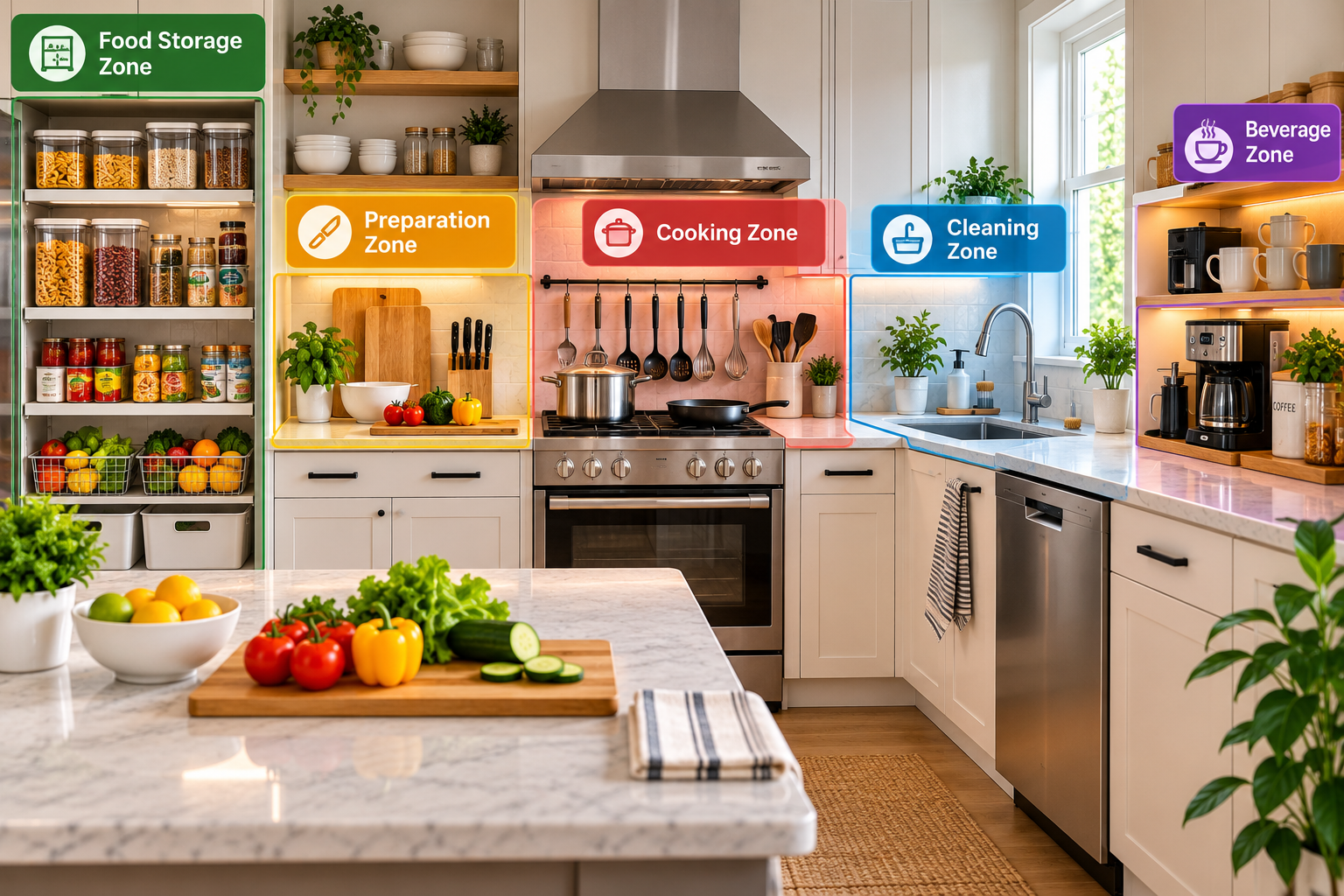
Create Functional Kitchen Zones
Functional zoning is an efficient way to arrange kitchen essentials.
A kitchen can be divided into preparation, cooking, cleaning, food storage, and beverage areas.
For example, cutting boards, knives, and mixing bowls belong near the food preparation counter. Pots, pans, and cooking utensils should be positioned close to the stove.
Dishwashing supplies belong near the sink, while mugs, coffee, and tea accessories can share a beverage station.
This approach reduces unnecessary movement and makes daily tasks more intuitive.
Kitchen Cabinet Organization Ideas
Kitchen cabinets often contain more usable space than their current arrangement suggests. The challenge is making that space accessible without creating overcrowded shelves.
Use Adjustable Cabinet Shelves
Adjustable shelves and stackable shelf risers help utilize vertical cabinet space.
Instead of stacking plates, bowls, and mugs into unstable piles, use shelf risers to create separate storage levels. This allows you to access one category without disturbing another.
Measure the cabinet’s interior height before purchasing shelf organizers, and ensure that shelves can support the weight of the items placed on them.
Install Pull-Out Cabinet Organizers
Deep cabinets can become inconvenient when frequently used items disappear behind other belongings.
Pull-out organizers solve this problem by bringing stored items toward the front of the cabinet.
Sliding baskets and pull-out trays are particularly useful for cookware, food containers, and pantry supplies. They also reduce the need to reach into awkward cabinet corners.
For rented homes, consider freestanding sliding organizers that do not require permanent installation.
Organize Pots, Pans, and Lids
Pots and pans are among the most challenging kitchen essentials to organize because they vary considerably in size and shape.
Vertical pan racks can separate frying pans, while adjustable lid holders keep cookware lids upright and easy to identify.
Where appropriate, nesting compatible cookware can save additional space. Place protective dividers between delicate nonstick surfaces to help prevent scratches.
Store heavier cookware on lower shelves for safer lifting.
Make Use of Cabinet Doors
The inside of a cabinet door can provide valuable additional storage.
Slim door-mounted racks can hold lightweight items such as measuring spoons, small cleaning accessories, or food wrap.
Adhesive hooks can also work for certain lightweight utensils.
Check door clearance before installing organizers. Avoid placing heavy items on doors that are not designed to support additional weight.
Kitchen Drawer Organization Ideas
Drawers work best when their contents are separated into clear, functional categories.
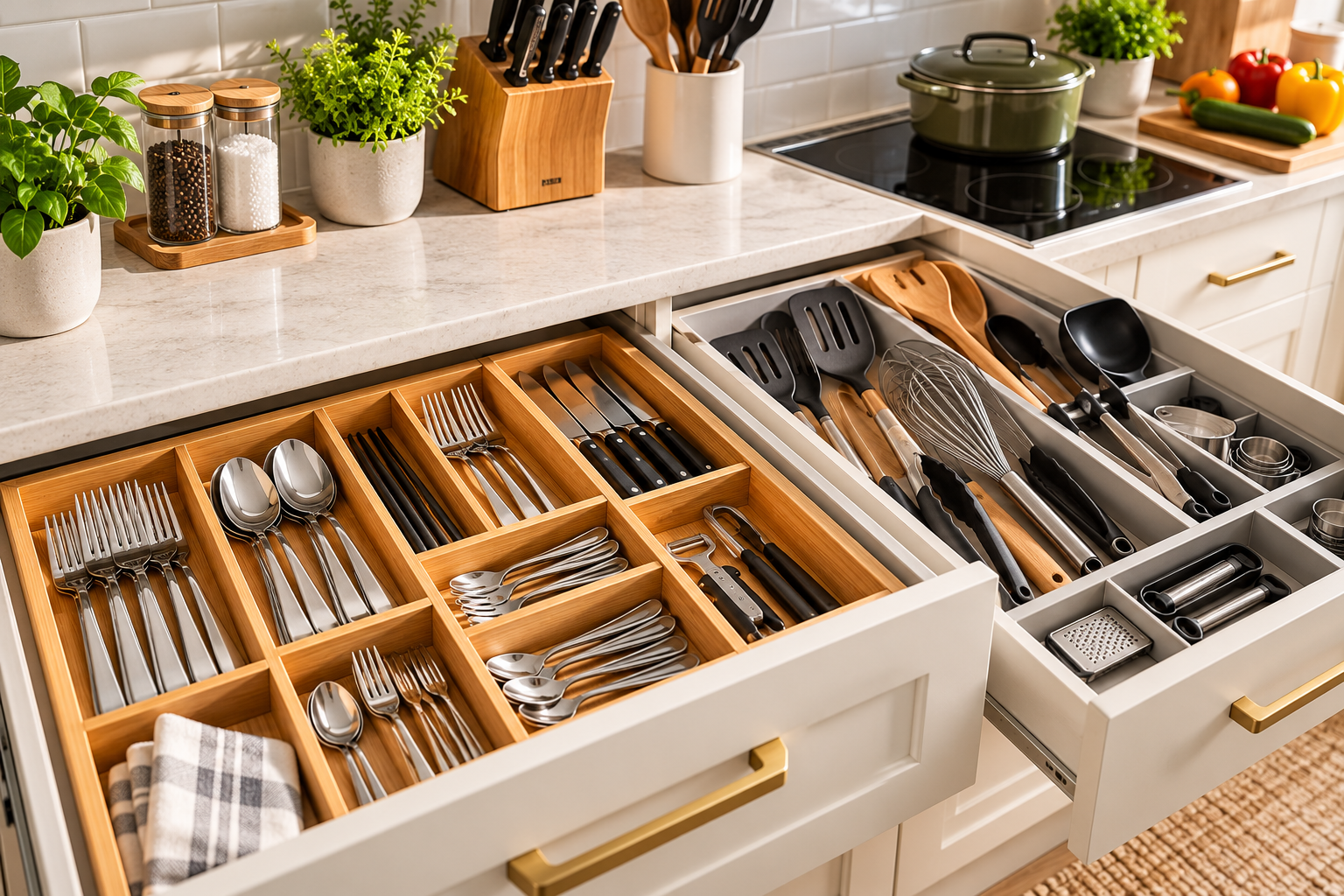
Choose Adjustable Drawer Dividers
Adjustable drawer dividers create dedicated compartments for different kitchen tools.
Bamboo, plastic, and expandable organizers are common options, each offering different advantages.
Bamboo provides a warm, natural appearance, while washable plastic dividers are practical for areas exposed to crumbs or moisture.
Choose organizers based on drawer dimensions and the utensils you actually own.
Organize Cutlery and Cooking Utensils
Separate forks, spoons, knives, and serving utensils into dedicated compartments.
Keep everyday cutlery in a drawer near the dining or preparation area. Store larger cooking tools close to the stove, provided the location is safe and convenient.
Remove duplicate utensils that rarely serve a purpose.
For sharp knives, use protective inserts or dedicated knife storage rather than leaving exposed blades loose in a drawer.
Create a Dedicated Spice Drawer
A shallow drawer can become a convenient spice storage area.
Use angled spice inserts or appropriately sized containers to keep labels visible.
Arrange spices alphabetically or group them by cooking style, such as baking, everyday seasonings, and frequently used herbs.
Keep spices away from excessive heat, moisture, and direct sunlight to help maintain their quality.
Kitchen Pantry Organization Ideas
A well-organized pantry makes meal planning, grocery shopping, and food preparation easier.
Group Pantry Items by Category
Divide pantry products into logical categories such as breakfast foods, baking ingredients, grains, pasta, canned goods, snacks, and condiments.
Grouping similar products makes it easier to identify what is available.
It also helps prevent the accumulation of duplicate items.
For households with children, consider placing appropriate everyday snacks on accessible shelves while keeping potentially hazardous items out of reach.
Use Clear Food Storage Containers
Clear containers allow you to see the contents without opening every package.
They can be particularly useful for storing dry foods such as rice, pasta, oats, and cereal.
Choose containers specifically designed for food storage, and check whether they are suitable for the foods and conditions in which they will be used.
Do not discard important expiration dates, allergen information, or preparation instructions when transferring food into new containers.
Add Labels for Easy Identification
Labels make pantry systems easier for everyone in the household to understand.
Use simple, readable labels that identify the contents of each container or basket.
For foods transferred from their original packaging, include relevant best-before dates and other important information.
A consistent labeling system can also create a cohesive, attractive pantry appearance.
Organize Pantry Shelves by Frequency of Use
Store frequently used pantry ingredients at comfortable eye or hand level.
Place less frequently used products on higher or lower shelves, depending on their weight and accessibility.
Heavier items should generally remain on sturdy lower shelves.
Rotate food supplies so older products are used before newer ones, while always following food safety and expiration guidance.
Small Kitchen Organization Ideas
A compact kitchen requires thoughtful use of every available storage area. Fortunately, even limited spaces can become more functional with the right approach.
Maximize Vertical Storage
Vertical storage is one of the most effective small kitchen organization ideas.
Wall shelves, stackable organizers, and tall storage units allow you to use height instead of occupying additional floor space.
Install shelves securely and follow their weight limits.
Avoid placing frequently used heavy objects on high shelves where they may be difficult to retrieve safely.
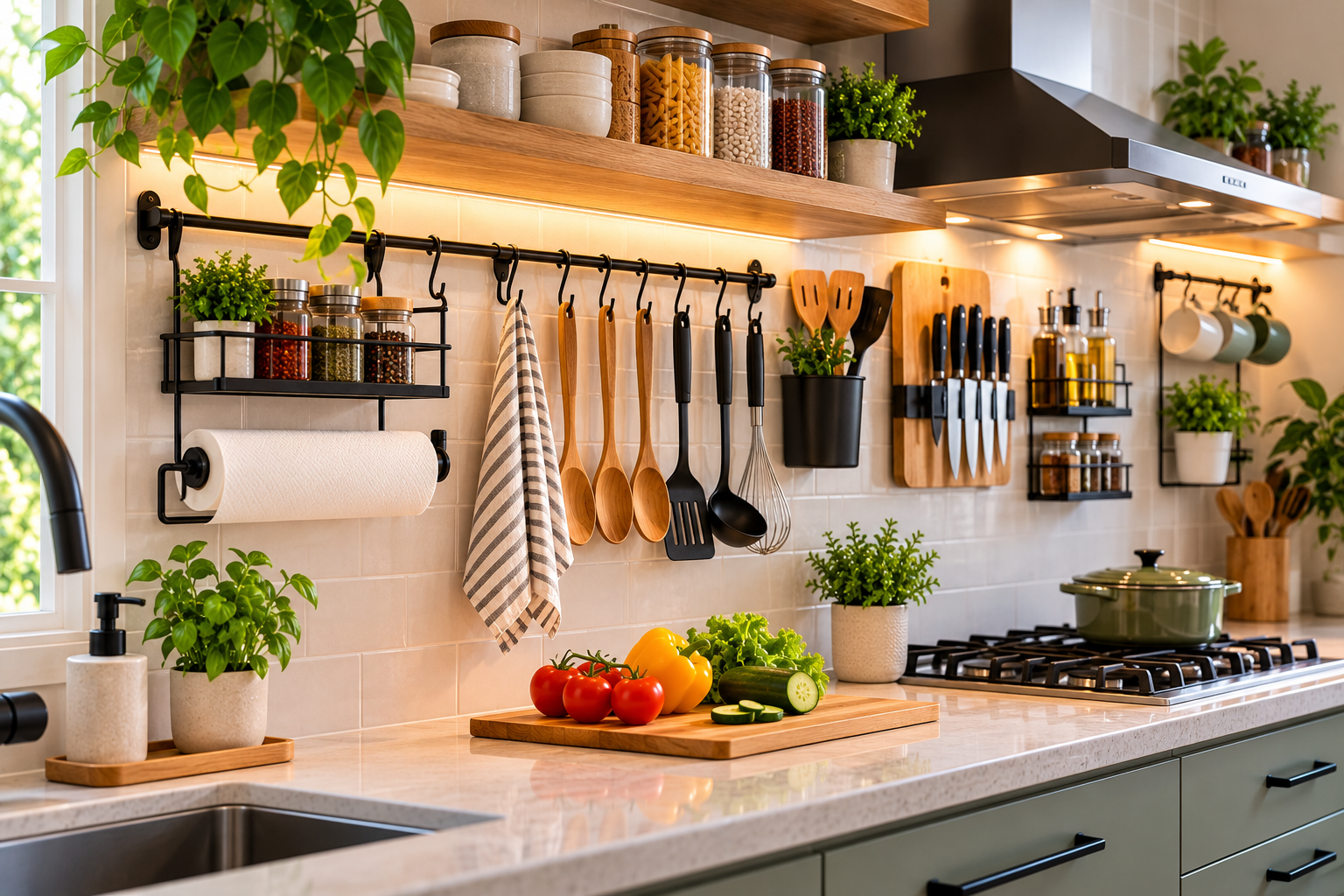
Use Wall-Mounted Kitchen Organizers
Wall-mounted rails, hooks, and racks can free up valuable drawer and countertop space.
They are useful for lightweight utensils, oven mitts, and other regularly used accessories.
A compact wall-mounted organizer near the preparation area can keep essential tools within reach.
Choose placements that do not interfere with cabinets, doors, or cooking appliances.
Choose Space-Saving Storage Solutions
Look for organizers that address a specific storage challenge.
Slim rolling carts may fit between suitable appliances and cabinets, while tiered shelves can improve visibility inside deep storage areas.
Nesting mixing bowls and stackable food containers can reduce the amount of space occupied by kitchen essentials.
Avoid adding storage products simply because they look attractive. Each organizer should solve a genuine problem.
Make Use of Under-Sink Storage
The cabinet beneath the kitchen sink is often underutilized.
Adjustable shelves, small baskets, and pull-out organizers can help separate appropriate cleaning accessories.
Before installing storage, account for plumbing pipes, moisture, and access requirements.
Keep household chemicals in their original labeled containers and store them securely away from children, pets, and food products. Avoid placing incompatible cleaning chemicals together.
For safe refrigerator and freezer storage, follow the recommended food storage guidelines provided by FoodSafety.gov.
Kitchen Counter Organization Ideas
Kitchen countertops are among the most visible areas of the home. Keeping them organized can make the entire kitchen appear cleaner and more spacious.
Keep Countertops Clutter-Free
Start by removing objects that do not need to remain on the counter.
Keep only the appliances, utensils, and ingredients you use frequently. Store occasional-use items inside cabinets or pantry shelves.
Use a small tray to group related objects, such as cooking oil, salt, and pepper. This creates a deliberate arrangement instead of scattered clutter.
Leave sufficient clear space for chopping, mixing, and preparing meals.
Organize Everyday Kitchen Appliances
Small appliances can quickly consume valuable countertop space.
Evaluate how often you use your toaster, blender, coffee machine, air fryer, and other kitchen equipment.
Keep daily-use appliances accessible, but consider storing less frequently used devices in designated cabinets.
Maintain appropriate ventilation and clearance around appliances according to manufacturer instructions.
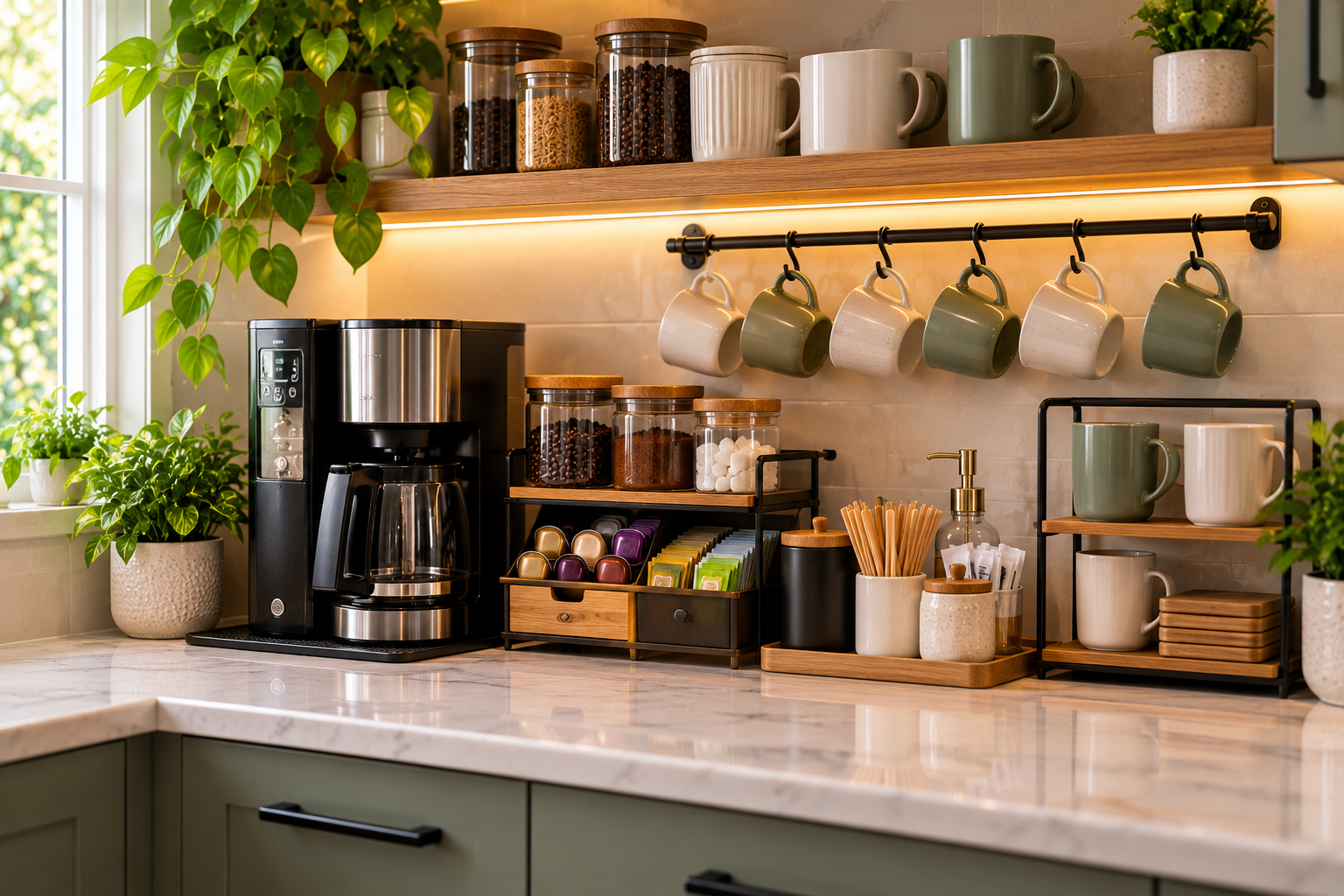
Create a Functional Coffee Station
A dedicated coffee station can make your morning routine more convenient.
Choose a suitable corner or counter section for your coffee machine, mugs, coffee supplies, and accessories.
Use a small organizer for coffee pods, tea bags, sweeteners, or stirrers.
If space is limited, store mugs on a nearby shelf and keep only essential supplies on the counter.
A coordinated coffee station can be both functional and visually appealing.
Refrigerator and Freezer Organization
Refrigerator organization is an important part of efficient kitchen management. A clear arrangement helps you locate food, monitor supplies, and reduce unnecessary purchases.
Use Refrigerator Storage Bins
Removable refrigerator bins can help group suitable foods and make cleaning easier.
Use appropriately sized containers for packaged snacks, condiments, and other refrigerated items.
Transparent bins make their contents visible without requiring you to move everything around.
Avoid overcrowding refrigerator shelves or blocking air vents, as proper airflow is important for temperature control.
Organize Food by Storage Requirements
Different foods have different storage needs.
Keep raw meat, poultry, and seafood securely contained on a lower shelf to prevent drips onto ready-to-eat foods.
Store fruits and vegetables according to their specific refrigeration requirements.
Place leftovers in suitable covered containers and label them with preparation dates when useful.
Follow food safety recommendations and keep the refrigerator at or below 40°F (4°C).
Improve Freezer Organization
Freezer baskets and appropriately sized containers can help separate different types of frozen food.
Group vegetables, prepared meals, frozen fruit, and other items into clearly labeled sections.
Use freezer-safe packaging and include dates to help track storage time.
Keep the freezer at 0°F (-18°C) or below, and avoid blocking airflow.
An organized freezer makes meal planning easier and reduces the need to search through tightly packed packages.
Budget-Friendly Kitchen Organization Ideas
An organized kitchen does not require expensive accessories or a complete renovation.
Repurpose Existing Containers
Before buying new organizers, examine what you already own.
Clean, suitable containers may be reused for nonfood items such as measuring tools, small utensils, or kitchen accessories.
Baskets and trays can also help group related supplies.
For food storage, use containers specifically suitable for food contact and the intended storage conditions.
Repurposing appropriate household items can reduce unnecessary spending and waste.
Choose Affordable Kitchen Organizers
Focus on purchasing products that solve clearly identified problems.
Useful options may include:
- Adjustable drawer dividers
- Stackable cabinet shelf risers
- Clear pantry containers
- Vertical pan organizers
- Under-sink storage baskets
- Lazy Susan turntables
- Slim countertop organizers
- Door-mounted storage racks
Compare dimensions, materials, cleaning requirements, and weight limits before purchasing.
A simple, properly sized organizer is often more useful than an elaborate storage system that does not match your kitchen layout.
Avoid Common Kitchen Organization Mistakes
Even attractive organization systems can become inconvenient if they are poorly planned.
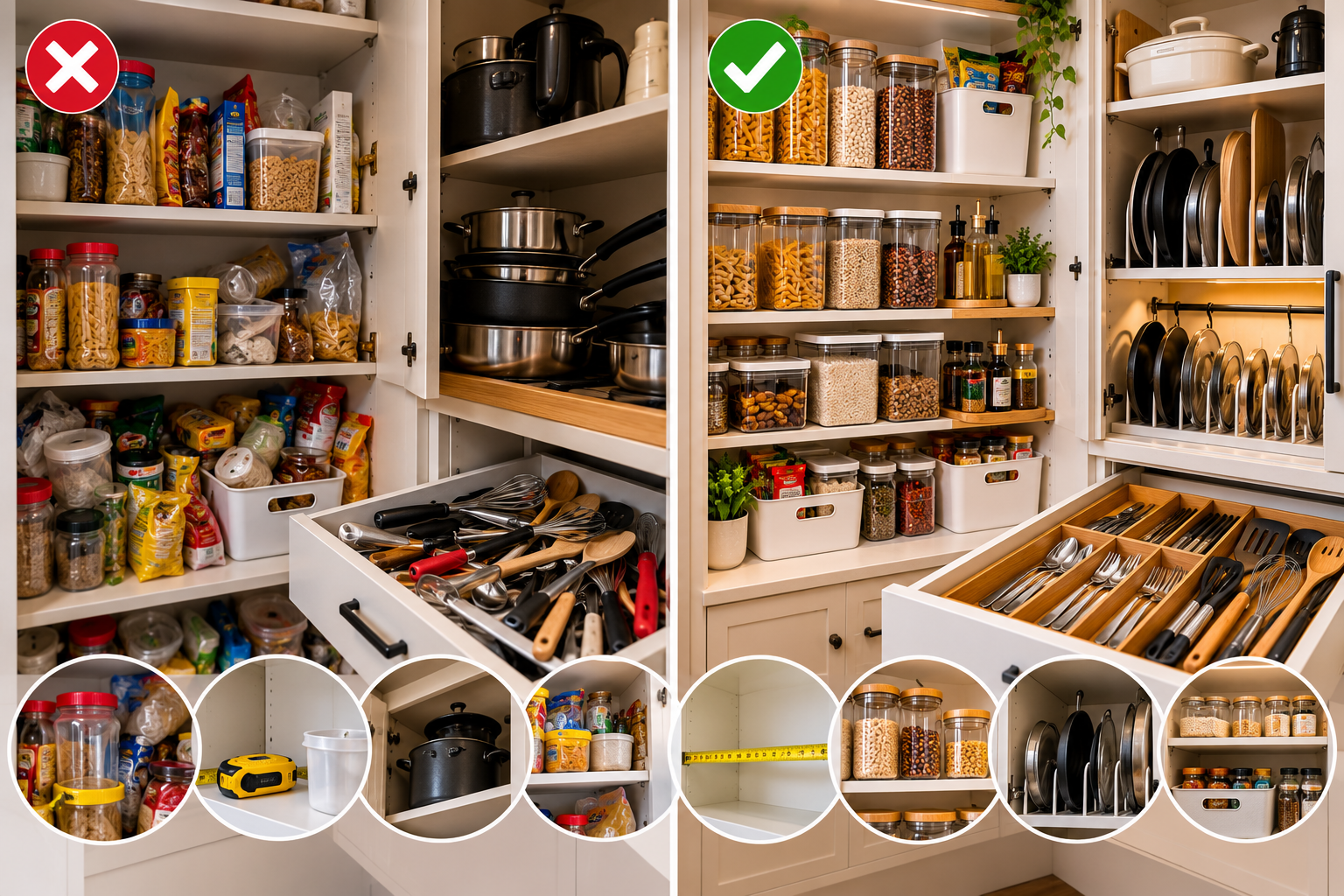
One common mistake is buying containers before measuring storage spaces.
Another is transferring every pantry product into matching jars without considering food labeling, container capacity, or maintenance.
Overcrowding shelves, storing heavy items too high, and placing frequently used essentials in difficult-to-reach locations can also reduce functionality.
Prioritize accessibility and practicality over appearance alone.
Maintaining an Organized Kitchen
The most effective kitchen organization ideas are the ones you can maintain consistently.
Establish a Daily Kitchen Reset
A short daily reset can prevent clutter from accumulating.
After preparing meals, return ingredients to their designated locations, wipe preparation surfaces, and put away clean utensils.
Check that frequently used areas remain accessible.
Small, repeatable habits are usually easier to maintain than occasional large organization projects.
Follow a Weekly Organization Routine
Set aside time each week to review the refrigerator, pantry, and commonly used cabinets.
Check food dates, identify ingredients that need to be used, and remove unnecessary packaging.
Wipe storage surfaces as needed and return misplaced objects to their designated locations.
This routine can help maintain the organization system without requiring extensive effort.
Adjust Your Storage System as Needed
Your kitchen storage requirements may change over time.
New appliances, different cooking habits, and changing household needs can affect how much space you require.
Review your storage arrangements periodically and make adjustments when certain areas become inconvenient.
A flexible system is more sustainable than one that requires everything to remain perfectly arranged at all times.
Conclusion: Create a Kitchen That Works for Your Lifestyle
The best kitchen organization ideas focus on making everyday tasks easier, not simply creating attractive shelves and perfectly arranged containers.
From adjustable cabinet organizers and drawer dividers to pantry storage systems and space-saving solutions, thoughtful changes can improve the functionality of kitchens of different sizes.
Start with the areas that cause the most frustration. Declutter unnecessary belongings, measure your available space, and introduce practical storage solutions gradually.
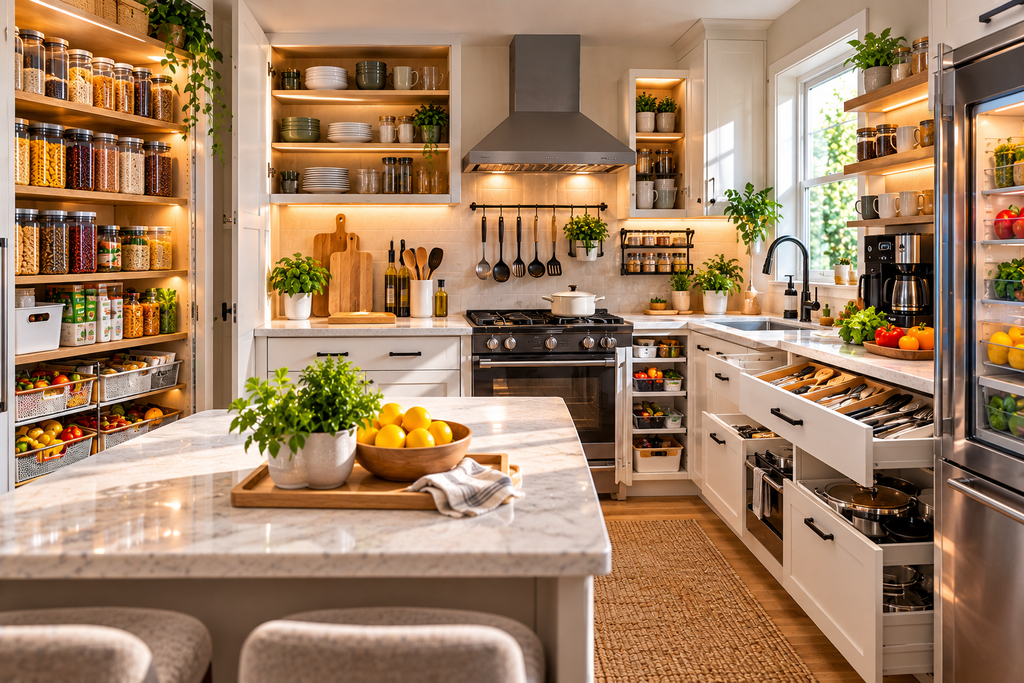
With consistent habits and purposeful organization, you can create a kitchen that feels more spacious, welcoming, and enjoyable to use.
Frequently Asked Questions About Kitchen Organization Ideas
How Can I Organize My Kitchen With Limited Space?
Focus on vertical storage, cabinet shelf risers, drawer dividers, and wall-mounted organizers. Remove unnecessary items and keep frequently used essentials within easy reach.
What Are the Best Kitchen Organization Products?
Useful products include adjustable drawer dividers, pantry storage containers, pull-out cabinet organizers, vertical pan racks, and stackable shelves. The best choice depends on your kitchen layout and storage requirements.
How Do I Keep My Kitchen Counters Organized?
Keep only frequently used appliances and essentials on your countertops. Store occasional-use items in cabinets and group related objects on small trays.
How Often Should I Declutter My Kitchen?
A brief weekly review can help maintain order, while a more thorough decluttering session every few months can identify unused tools, duplicate products, and unnecessary belongings.
How Can I Organize My Kitchen on a Budget?
Begin by decluttering and rearranging existing storage. Repurpose suitable containers, use affordable dividers, and purchase new organizers only when they address a specific problem.
Explore practical kitchen storage solutions and home organization essentials in the Haidza Home & Living Collection.