
Lighting is one of the most influential elements of interior design. It determines how a room looks, how comfortably people can use it, and how its architectural features are perceived. A beautifully furnished living room can appear flat under harsh overhead lights, while a modest bedroom can feel remarkably inviting with carefully positioned illumination.
LED and ambient lighting offer an adaptable way to create these effects. From warm bedside lamps to colorful RGB corner lights, modern lighting products can transform ordinary spaces into comfortable, expressive interiors.
The secret is not simply installing more lights. It is understanding brightness, color temperature, placement, and the relationship between different sources of illumination.
Whether you are renovating your home, decorating a bedroom, or upgrading your entertainment area, this guide explores practical ways to make LED and ambient lighting work beautifully together.
Understanding LED and Ambient Lighting
LED lighting and ambient lighting are closely related, but they describe different concepts.
LED refers to the technology used to produce light. Ambient lighting refers to the general illumination that makes a room comfortable and usable.
LED fixtures can provide ambient, task, or accent lighting depending on how they are designed and positioned.
For example, an LED floor lamp illuminating an entire living room contributes to ambient lighting. An LED strip behind a television primarily creates accent lighting, although its reflected glow can also contribute to the overall atmosphere.
Understanding this distinction helps homeowners create balanced lighting schemes rather than relying on a single fixture.
Why Lighting Matters in Modern Interior Design
Lighting shapes the visual identity of a room.
It can emphasize architectural details, reveal material textures, and create a sense of spaciousness. Soft illumination makes upholstered furniture and warm wood finishes feel inviting, while directional lighting can draw attention to artwork or decorative objects.
A thoughtful lighting arrangement also supports everyday activities.
Bright, well-positioned light makes cooking, reading, and working easier. Softer illumination can make a room more comfortable for relaxing in the evening.
Modern interior design increasingly treats lighting as an integral architectural element rather than an accessory added after the furniture has been arranged.
Understanding the Fundamentals of LED Lighting
What Is LED Lighting?
LED stands for Light Emitting Diode, a semiconductor component that produces light when electrical current passes through it.
Unlike traditional incandescent bulbs, which generate light by heating a filament, LEDs produce illumination through electroluminescence.
This process allows LED products to convert a greater proportion of electrical energy into useful light.
LED technology appears in many forms, including ceiling fixtures, decorative strips, floor lamps, desk lights, and smart bulbs.
Its compact size also allows manufacturers to develop slim, flexible, and visually discreet lighting products.
How LED Technology Works
Inside an LED, electrical energy causes electrons and electron holes to recombine within a semiconductor material, releasing energy as photons.
The semiconductor composition determines the emitted light’s characteristics.
Many white LED products use blue LEDs combined with phosphor materials to produce white illumination.
LED fixtures also contain electronic drivers that regulate electrical power.
The quality of these components influences efficiency, flicker, dimming performance, and longevity.
Key Benefits of LED Lighting
LED lighting has become popular because it combines efficiency with design flexibility.
Its main advantages include lower electricity consumption compared with many traditional lighting technologies, a potentially long operating life, and a wide selection of brightness levels and colors.
Many LED fixtures also support dimming, scheduling, and wireless controls.
Another benefit is their relatively compact construction, which makes concealed lighting possible in shelves, cabinetry, and architectural recesses.
However, performance varies between products. Quality, thermal management, and installation conditions remain important considerations.
LED Lighting vs. Traditional Lighting
| Feature | LED Lighting | Traditional Incandescent Lighting |
|---|---|---|
| Energy efficiency | Generally much higher | Relatively low |
| Operating lifespan | Often substantially longer | Typically shorter |
| Heat generation | Less waste heat for equivalent light output | Considerable waste heat |
| Color options | Extensive, including tunable and RGB | Usually limited without filters |
| Smart controls | Widely available | Requires compatible controls |
| Initial purchase cost | Can be higher | Often lower |
| Long-term operating cost | Generally lower | Generally higher |
LEDs are not entirely heat-free. They still require appropriate heat dissipation, particularly in enclosed fixtures.
Exploring Ambient Lighting
What Is Ambient Lighting?
Ambient lighting is the foundational illumination that provides general visibility throughout a room.
It creates a comfortable baseline of brightness without necessarily highlighting one particular object.
Common ambient lighting sources include ceiling fixtures, chandeliers, wall-mounted lights, and floor lamps that distribute light broadly.
A successful ambient lighting scheme minimizes uncomfortable contrasts between extremely bright and dark areas.
The objective is visual harmony.
The Difference Between Ambient, Task, and Accent Lighting
Professional lighting design commonly combines three complementary layers.
Ambient lighting provides general illumination across the room.
Task lighting directs light toward specific activities, such as reading, cooking, applying makeup, or working at a desk.
Accent lighting emphasizes selected features, including artwork, decorative shelves, textured walls, or architectural details.
For example, a living room might use a ceiling light for ambient illumination, a reading lamp beside the sofa for task lighting, and an LED strip behind a bookshelf for accent lighting.
Combining these layers creates a more functional and visually sophisticated interior.
How Ambient Lighting Influences Interior Atmosphere
The atmosphere of a room changes dramatically with lighting intensity, direction, and color.
Soft, warm illumination can make a living room feel intimate and comfortable.
Brighter neutral lighting often suits kitchens, bathrooms, and workspaces where clear visibility matters.
Indirect illumination can make a space feel less visually harsh by reducing exposed bright light sources.
These effects are influenced by individual preferences, room colors, surface reflectance, and the time of day.
The Importance of Layered Lighting
Layered lighting prevents a room from depending entirely on one overhead fixture.
Instead, multiple light sources work together to create depth and flexibility.
A layered arrangement might include an adjustable ceiling fixture, an LED floor lamp, and concealed strips beneath shelves.
Each source serves a different purpose.
When the room is used for social gatherings, several lights can operate together. During movie nights, overhead lighting can be reduced while indirect accent lights remain on.
This flexibility is one of the defining characteristics of contemporary lighting design.
Popular Types of LED and Ambient Lighting
LED Strip Lights
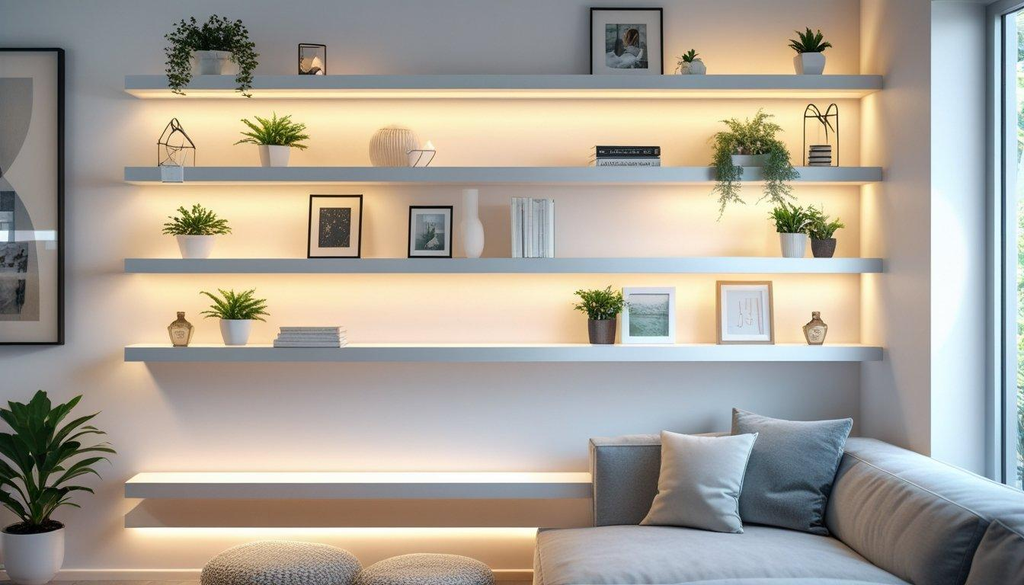

LED strip lights are flexible lighting products that can be installed along furniture edges, shelving, ceilings, and other architectural surfaces.
Their low-profile construction makes them particularly suitable for concealed illumination.
Popular applications include under-bed lighting, cabinet illumination, ceiling coves, and television backlighting.
For a refined result, install strips inside aluminum channels with diffusers. These accessories can help soften the appearance of individual LED points and improve heat dissipation.
RGB and RGBIC LED Lighting
RGB lighting combines red, green, and blue light to create different colors.
Many RGB LED products allow users to select colors, adjust brightness, and choose preset lighting effects.
RGBIC products use individually controlled LED segments or zones, enabling several colors to appear along the same strip or fixture simultaneously.
This makes RGBIC lighting especially popular for gaming rooms, entertainment spaces, and decorative corner lamps.
For everyday interiors, subtle color combinations often create a more sophisticated effect than constantly changing, highly saturated patterns.
Looking to bring colorful ambient lighting into your living room, bedroom, or gaming setup? Explore the 2 Pack RGBIC LED Corner Floor Lamps at Haidza. Featuring customizable colors, dynamic lighting effects, and music synchronization, these modern corner lamps offer a stylish way to personalize your space.
LED Floor Lamps
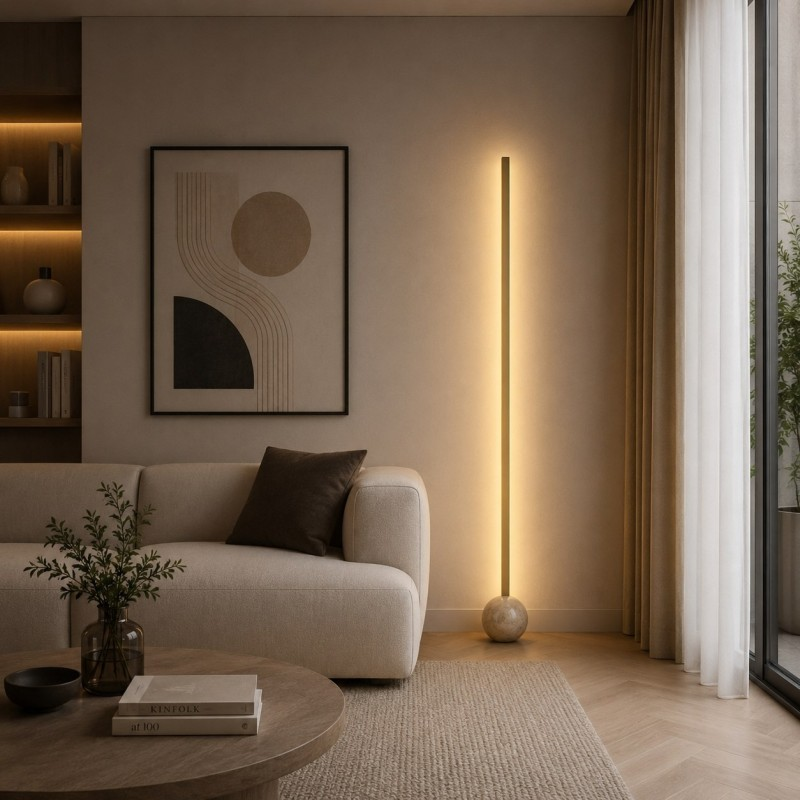
LED floor lamps offer an effective way to add illumination without permanent electrical installation.
They are particularly useful in rented homes or rooms with limited ceiling fixtures.
Uplighter models direct light toward the ceiling, where it reflects into the room and creates a softer ambient effect.
Adjustable floor lamps can also provide focused illumination for reading and other activities.
When choosing a floor lamp, consider its brightness, stability, dimming controls, and light distribution.
LED Corner Floor Lamps
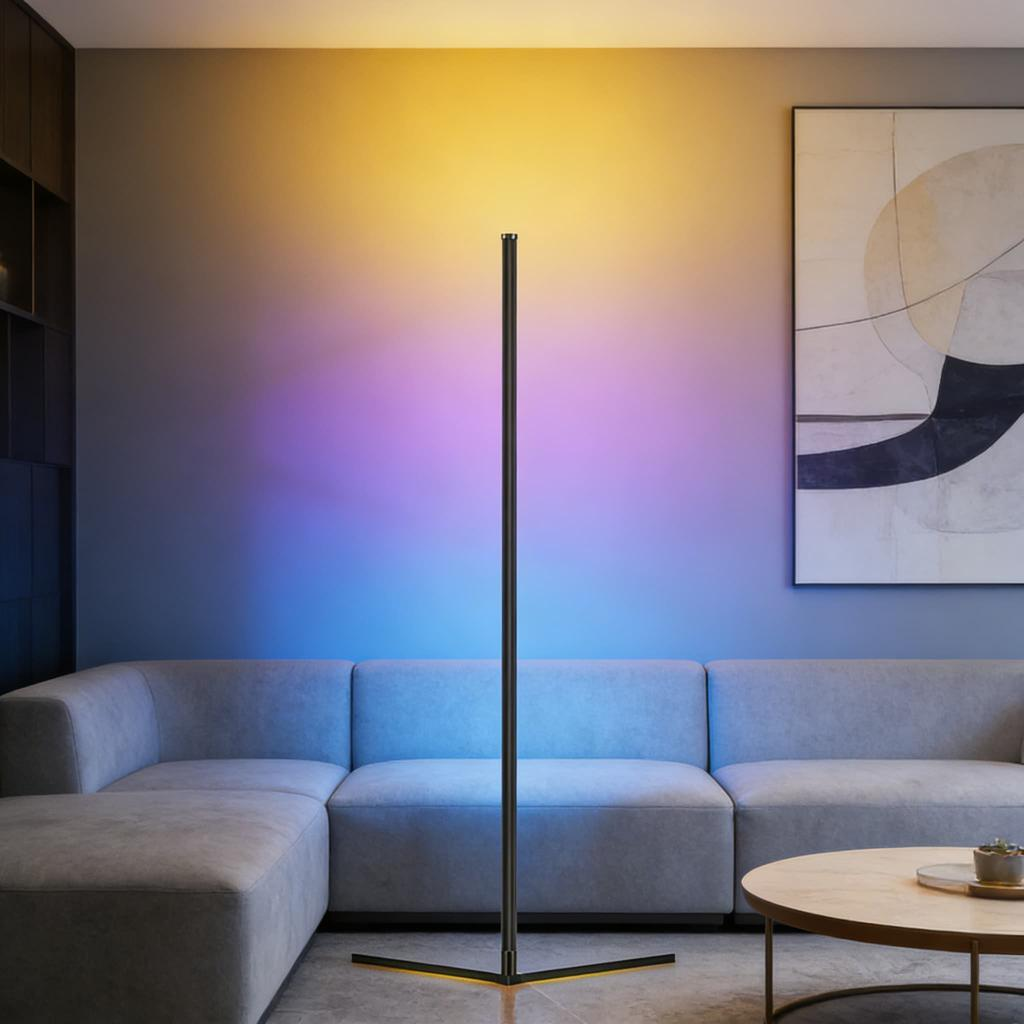
LED corner floor lamps have become popular for their slender appearance and colorful indirect illumination.
They fit neatly into corners and often project light toward adjacent walls.
This arrangement creates a luminous backdrop without occupying much floor space.
Many models offer RGB or RGBIC color options, remote controls, mobile app connectivity, and music-reactive modes.
A corner lamp can be especially effective behind a sofa, beside a media console, or in a gaming setup.
Smart LED Bulbs
Smart LED bulbs allow users to control compatible lighting through mobile apps, wireless switches, or voice assistants.
Depending on the model, features may include brightness adjustment, color-temperature changes, schedules, and preset scenes.
Some products require a dedicated hub, while others connect through Wi-Fi, Bluetooth, or compatible smart-home protocols.
Check compatibility before purchasing.
A smart bulb should also be appropriate for the fixture’s electrical rating and intended environment.
Galaxy Projectors and Starry Sky Lights
Galaxy projectors create decorative patterns resembling stars, nebulae, auroras, or moving waves of light.
They are commonly used in bedrooms, entertainment areas, and relaxation spaces.
Some models offer adjustable colors, movement effects, timers, and remote controls.
These products are primarily decorative rather than substitutes for adequate general room lighting.
For a balanced atmosphere, combine a projector with a dimmable bedside lamp or another practical light source.
LED Wall Lights and Light Panels
LED wall lights and modular light panels add visual interest to otherwise plain surfaces.
Geometric light panels can form distinctive arrangements, while linear wall fixtures provide a more restrained architectural appearance.
They are especially useful behind desks, entertainment centers, and decorative seating areas.
Consider cable management carefully. Visible cords can undermine an otherwise polished design.
Under-Cabinet LED Lighting
Under-cabinet lighting provides useful illumination for kitchen countertops and work surfaces.
It reduces shadows created when someone stands between a ceiling fixture and the countertop.
LED strips and linear light bars are common choices.
Neutral white lighting with good color rendering is often preferable for food preparation because it helps colors appear more natural.
Select products rated for the relevant kitchen environment and install electrical components according to manufacturer instructions.
LED Table Lamps and Bedside Lights
Table lamps add a comfortable pool of illumination while contributing to a room’s decorative character.
Dimmable LED bedside lamps are especially versatile.
They can provide brighter light for reading and softer illumination before bedtime.
Choose fixtures with suitable shades or diffusers to prevent direct glare when viewed from a seated or reclining position.
LED and Ambient Lighting Ideas for Every Room
Living Room Ambient Lighting Ideas

The living room benefits from a combination of functional and decorative lighting.
Begin with a reliable source of general illumination. Then introduce additional light sources around the room.
A warm LED floor lamp beside the sofa can create a comfortable seating area.
LED strips behind a television or bookshelf add visual depth.
For movie nights, use dimmable indirect lighting rather than leaving bright ceiling fixtures switched on.
A well-balanced living room should feel comfortable for conversation, reading, entertaining, and relaxation.
Bedroom LED Lighting Ideas
Bedrooms often benefit from softer lighting arrangements.
Warm white bedside lamps, concealed headboard lighting, and indirect ceiling strips can create a welcoming atmosphere.
An LED strip installed beneath the bed can produce a subtle floating effect.
For evening use, choose low brightness and warmer color temperatures when possible.
Avoid placing exposed, high-intensity LEDs directly within the normal line of sight from the bed.
Kitchen LED Lighting Solutions
Kitchen lighting should prioritize visibility and practicality.
Use adequate ambient illumination across the room, supported by task lighting above countertops and cooking areas.
Under-cabinet LEDs can improve visibility during food preparation.
Pendant lights above a kitchen island can contribute both decorative character and functional illumination.
Choose fixtures that are easy to clean and appropriate for their installation locations.
Bathroom Ambient Lighting
Bathroom lighting requires a careful balance between appearance and safety.
Soft ambient lighting can create a spa-inspired atmosphere, while brighter mirror lighting helps with grooming.
Vertical lighting beside a mirror often provides more even facial illumination than a single overhead source.
Any fixture installed near water must have an appropriate ingress-protection rating and comply with local electrical requirements.
Professional installation is advisable where fixed wiring is involved.
Home Office LED Lighting
Home offices need lighting that supports comfortable screen use and focused work.
Combine general room illumination with a desk lamp that provides adjustable directional light.
Avoid positioning bright fixtures where they create reflections on monitors.
Neutral white lighting may suit daytime working, while adjustable color temperature offers flexibility later in the day.
The goal is clear visibility without unnecessary glare.
Gaming Room and Entertainment Lighting
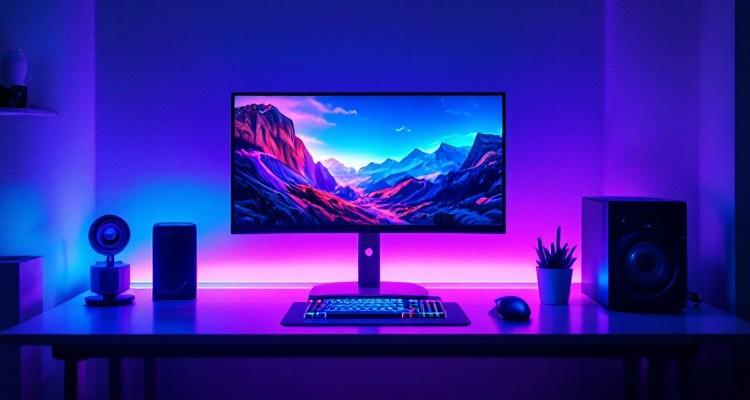
Gaming rooms are ideal spaces for experimenting with RGB and RGBIC lighting.
LED strips behind monitors can create a colorful background.
Corner floor lamps and wall panels add dimensionality to the space.
For a cohesive appearance, select a limited color palette rather than mixing too many competing hues.
Bias lighting behind a display can also make the surrounding environment more comfortable when its brightness and color are appropriately configured.
Hallway and Staircase Lighting
Hallways and staircases benefit from lighting that improves navigation.
Wall-mounted fixtures, recessed LEDs, and low-level step lights can provide practical illumination.
Motion-activated lighting is particularly convenient in frequently used circulation areas.
Keep stair treads and changes in floor level clearly visible, and avoid decorative lighting effects that interfere with depth perception.
Outdoor LED Ambient Lighting
Outdoor lighting can make patios, balconies, gardens, and entrance areas more inviting.
Warm LED string lights create a relaxed atmosphere for outdoor seating.
Pathway fixtures improve visibility along walking routes.
Wall lights can emphasize architectural textures, while carefully positioned landscape lighting highlights plants and garden features.
Use weather-appropriate fixtures and electrical equipment rated for outdoor conditions.
Creating the Perfect Lighting Atmosphere
Understanding Color Temperature
Color temperature describes the visual appearance of white light and is measured in Kelvin (K).
Lower Kelvin values generally appear warmer and more yellow or amber.
Higher values appear cooler and more bluish.
LED Color Temperature Guide
2700KWarm white
3000KSoft warm
4000KNeutral white
6500KCool daylight
Illustrative color appearances. Actual light depends on the fixture and display.
| Color Temperature | Appearance | Common Applications |
|---|---|---|
| 2200K–2700K | Very warm to warm white | Cozy lounges and evening accent lighting |
| 3000K | Warm white | Bedrooms and living rooms |
| 3500K–4000K | Neutral white | Kitchens, bathrooms, and workspaces |
| 5000K–6500K | Cool white to daylight-like | Selected task and utility lighting |
There is no universally perfect color temperature. Room function and personal preference matter.
Warm White vs. Cool White Lighting
Warm white lighting generally produces a softer, more intimate appearance.
It often complements timber, cream-colored fabrics, and traditional interior finishes.
Cooler white lighting can make certain environments feel crisp and visually energetic.
However, very cool lighting may feel harsh in bedrooms or intimate seating areas.
Tunable white LED fixtures offer a flexible alternative by allowing users to change color temperature as needed.
Choosing the Right Brightness
Brightness is an essential consideration when selecting LED products.
Lumens describe the amount of visible light emitted by a source.
Watts describe electrical power consumption.
A higher wattage does not automatically mean a brighter LED product, because efficiency varies.
For example, a small decorative strip may produce attractive accent lighting but provide insufficient illumination for reading.
Choose brightness according to the room’s dimensions, wall colors, fixture distribution, and intended activities.
Using RGB Colors for Different Moods
RGB lighting allows homeowners to personalize their spaces.
Soft amber and peach tones can complement warm interiors.
Muted blue or violet lighting can create a contemporary decorative atmosphere.
Green tones can work well alongside plants and natural materials.
Rather than assigning a universal emotional effect to each color, experiment with combinations that suit the room and your preferences.
For everyday use, lower saturation and moderate brightness often produce a more refined result.
Combining Natural and Artificial Light
Natural daylight changes continuously throughout the day.
A successful lighting scheme adapts to these variations.
During daylight hours, window placement and reflective surfaces may provide much of the room’s illumination.
As daylight fades, artificial lighting becomes more important.
Dimmable fixtures and adjustable white LEDs allow smoother transitions between daytime and evening environments.
Smart LED Lighting and Modern Technology
Smart Lighting Systems
Smart lighting systems combine compatible LED products with digital controls.
They allow users to manage lighting scenes, schedules, and sometimes entire groups of fixtures.
For example, a single preset might dim the living room lights, activate a warm floor lamp, and switch on television backlighting.
Choose a system with reliable connectivity and clear compatibility information.
Voice-Controlled LED Lighting
Compatible smart lighting products can be controlled through supported voice assistants.
This can make it easier to adjust brightness, switch fixtures on or off, and activate preset scenes.
Voice control is especially convenient when several fixtures are distributed throughout a room.
Features vary between manufacturers and ecosystems.
App-Controlled RGB Lighting
Mobile apps can provide detailed control over RGB lighting.
Depending on the product, users may adjust colors, brightness, effects, schedules, and individually controlled lighting zones.
Some apps allow users to save custom scenes.
For households with multiple smart devices, consider whether the lighting system supports the same smart-home platform.
Motion Sensors and Automated Lighting
Motion sensors can activate lighting when movement is detected.
Common applications include hallways, closets, staircases, and utility spaces.
Automated lighting can improve convenience and help avoid leaving lights switched on unnecessarily.
For bedrooms and hallways at night, low-brightness motion lighting may be preferable to sudden, intense illumination.
Music-Synchronized LED Lighting
Music-reactive LED products change their colors or effects in response to sound.
These systems are popular in entertainment spaces, gaming rooms, and party setups.
Some use microphones, while others rely on software integration.
For everyday comfort, select slower transitions or disable rapid flashing when it is unnecessary.
People sensitive to flashing lights should avoid strobe effects.
Energy Efficiency and Sustainability
How LED Lighting Helps Reduce Energy Consumption
LED lighting can significantly reduce electricity use compared with traditional incandescent lighting when producing similar amounts of light.
Consider a simple example.
Estimated Lighting Energy Calculator
LED power consumption
9 WDaily usage
5 hoursElectricity price per kWh (USD example)
Annual energy use
16.4 kWh
Estimated annual cost
$3.29
Illustrative calculation for one light operating 365 days per year. Actual electricity rates, power draw, and usage vary.
For example, a 9-watt LED operated for five hours daily consumes approximately 16.4 kWh annually.
An equivalent 60-watt incandescent bulb used for the same period consumes approximately 109.5 kWh.
That represents a substantial difference in energy consumption.
Understanding LED Lifespan
LED products often have longer rated operating lives than traditional incandescent bulbs.
However, actual longevity depends on several factors.
These include product quality, operating temperature, driver electronics, ventilation, and frequency of use.
A manufacturer’s lifespan rating is an estimate under specified conditions, not a guarantee that every unit will operate for that duration.
Sustainable Lighting Practices
Energy-efficient lighting is one component of a more sustainable home.
Other useful practices include choosing durable fixtures, using timers and occupancy sensors, and avoiding unnecessary illumination.
Repairable or replaceable components can also reduce waste.
Dispose of failed electronic lighting products according to local recycling and electronic-waste requirements.
Choosing and Installing LED Lighting
How to Choose the Right LED Lights
Before purchasing LED lighting, consider the intended purpose.
For general room illumination, prioritize adequate brightness and comfortable light distribution.
For decorative lighting, focus on placement, color control, and visual appearance.
For workspaces, consider color rendering, glare control, and flicker performance.
Also check voltage compatibility, product dimensions, warranty information, and installation requirements.
Common LED Lighting Mistakes
One common mistake is relying entirely on bright overhead lighting.
Another is installing exposed LED strips where individual diodes are directly visible.
Mixing several incompatible color temperatures can also make an interior appear visually inconsistent.
Other problems include choosing insufficient brightness, overlooking cable management, and purchasing smart lighting without checking compatibility.
Careful planning helps avoid these issues.
Installation and Safety Considerations
Always follow the manufacturer’s installation instructions.
Use compatible power supplies and avoid exceeding the rated electrical capacity of LED strips or controllers.
Do not install indoor-only fixtures in wet or outdoor environments.
Keep heat-producing components adequately ventilated.
Fixed electrical installations should be performed by qualified professionals where required.
Maintaining LED Lights for Long-Term Performance
LED fixtures generally require limited maintenance.
Keep accessible surfaces clean and remove dust that may obstruct ventilation.
Inspect cables and connectors periodically for damage.
For smart lighting products, install firmware updates from trusted manufacturers when appropriate.
If a fixture flickers unexpectedly, overheats, or shows visible electrical damage, stop using it until the problem has been assessed.
LED Lighting Trends and Creative Inspiration
Minimalist Ambient Lighting

Minimalist lighting emphasizes simplicity and restraint.
Concealed LED strips, slender floor lamps, and softly illuminated wall surfaces create a clean appearance.
The goal is to make the light itself feel integrated into the architecture.
Warm white tones often work particularly well with minimalist interiors.
Modern Luxury Lighting
Luxury-inspired interiors frequently combine elegant fixtures with discreet indirect illumination.
LED cove lighting can emphasize ceiling details, while carefully positioned wall lights reveal decorative textures.
Metallic finishes, natural stone, and upholstered furniture respond beautifully to controlled lighting.
The most effective arrangements avoid excessive brightness and visual clutter.
Hidden and Indirect LED Lighting
Indirect lighting is created when light reflects from a wall, ceiling, or another surface before reaching the viewer.
This technique can produce a soft, diffuse glow.
Popular applications include floating shelves, recessed ceiling channels, behind-headboard lighting, and under-cabinet strips.
Properly concealed fixtures create a seamless architectural effect.
Biophilic Lighting Design
Biophilic design seeks to strengthen the connection between interior spaces and the natural environment.
Lighting can contribute through adjustable white illumination, daylight integration, and gentle transitions in brightness.
Natural materials, indoor plants, and appropriately positioned lighting can create a cohesive interior.
Tunable lighting systems may help support different daytime and evening activities, although individual responses to light vary.
Future Trends in LED and Ambient Lighting
LED lighting continues to evolve through improvements in efficiency, controls, and fixture design.
Emerging developments include more sophisticated adaptive lighting, expanded smart-home interoperability, and compact architectural lighting systems.
Manufacturers are also exploring better color quality, more efficient drivers, and improved product longevity.
As these technologies develop, homeowners may gain greater control over the appearance and functionality of their living spaces.
Frequently Asked Questions About LED and Ambient Lighting
What Is the Best LED Lighting for a Bedroom?
Warm white, dimmable LED lighting is a versatile choice for bedrooms.
Bedside lamps, concealed strips, and indirect lighting can provide comfortable illumination without relying entirely on bright ceiling fixtures.
Are LED Lights Suitable for Everyday Use?
Yes. Properly designed and installed LED products are widely used for everyday residential lighting.
Choose reputable fixtures that meet relevant electrical safety standards and suit the intended environment.
What Color LED Light Creates a Relaxing Atmosphere?
Many people prefer warm white lighting around 2700K–3000K for comfortable evening interiors.
Low brightness and indirect placement can also contribute to a softer atmosphere.
Can LED Lighting Reduce Electricity Bills?
Yes. Replacing inefficient incandescent lighting with LEDs of comparable brightness can reduce electricity consumption.
Actual savings depend on wattage, operating hours, electricity prices, and the products being replaced.
How Do You Create Ambient Lighting Without Ceiling Lights?
Combine uplighter floor lamps, wall-mounted lights, table lamps, and concealed LED strips.
Position the fixtures around the room to distribute light evenly and reduce dark corners.
Conclusion: Transforming Your Home with LED and Ambient Lighting
LED and ambient lighting can transform the appearance and functionality of almost any interior.
The most successful lighting schemes combine practical illumination with carefully chosen decorative effects.
Warm LED floor lamps can make a living room more inviting. Concealed strips can emphasize architectural details. RGB corner lights can introduce personality to entertainment areas, while smart lighting controls provide convenient flexibility.
Rather than choosing lighting solely for its appearance, consider how each fixture supports the room’s activities, furniture arrangement, and overall design.
With thoughtful placement, suitable brightness, and complementary color temperatures, LED lighting becomes more than a functional necessity. It becomes an essential part of a comfortable, beautiful home.
Explore more home decor inspiration and lighting ideas through Haidza’s Home & Living collection.